
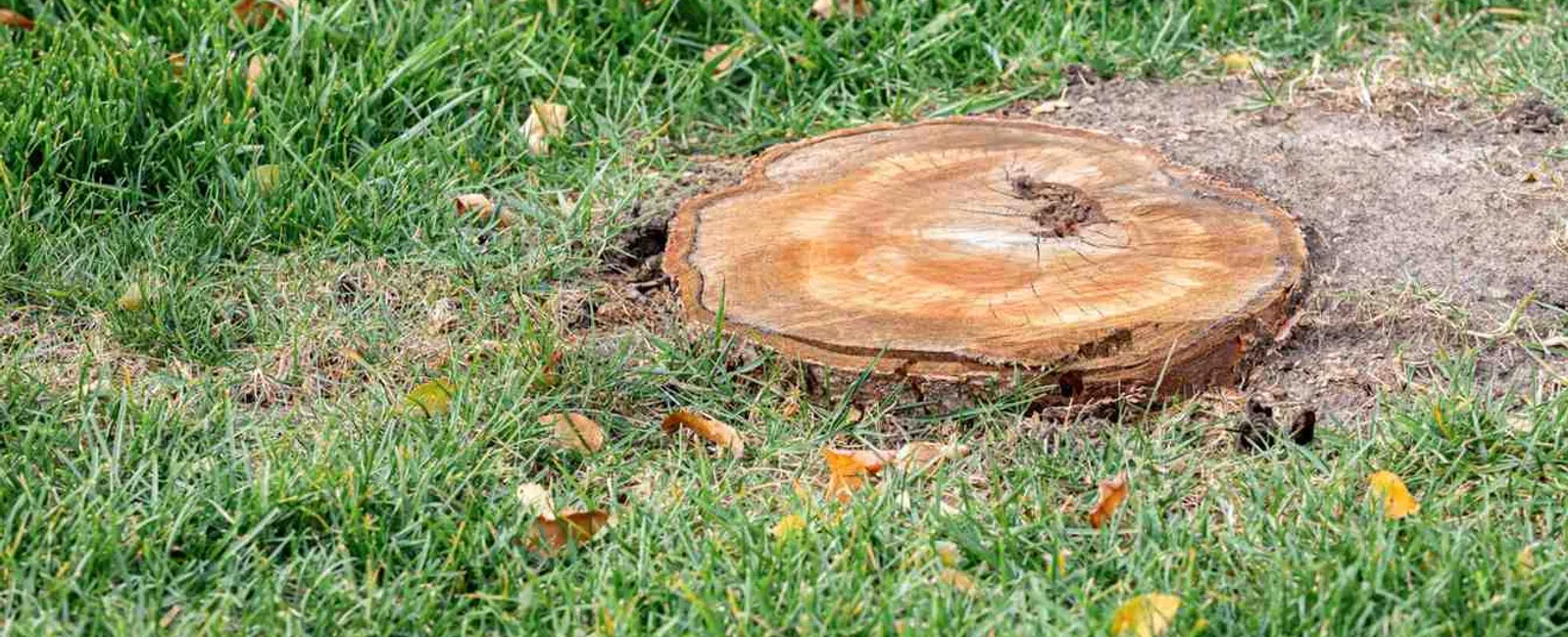
Yes, many tree stumps can grow back. When a tree is cut down, and the stump is left in the ground, the root system underneath is typically still alive. Those roots store energy, and many species use it to push out new growth. Leave the stump alone, and you can end up fighting the same tree all over again.
Why a Stump Grows Back
A tree is far more than the trunk you see above ground. Most of the living system sits below the surface in a wide network of roots. When the trunk comes down, those roots do not die right away. They still hold sugars and stored energy, and many species carry dormant buds along the stump and the root collar, the flared area where the trunk meets the roots.
With the canopy gone, the tree shifts into survival mode. It pours that stored energy into new growth, and thin green shoots start pushing up from the top of the stump and the soil around it. Those shoots are called suckers or stump sprouts. In a healthy, fast-growing tree, they can appear within a few weeks and grow several feet in a single season.
Which Trees Are Most Likely to Regrow
Some species sprout back far more aggressively than others. Across Southwest Virginia, Northeast Tennessee, and Western North Carolina, the common repeat offenders include:
- Maple
- Tulip poplar
- Locust
- Sweetgum
- Willow
- Elm
- Bradford pear
Fast-growing hardwoods are the most stubborn. A maple or locust stump can throw up a full ring of sprouts before you have even decided what to do with it. Oak can regrow too, though it tends to be slower about it. Pines and most other conifers are the exception. Once a pine is cut below its lowest living branch, it almost never comes back.
Will a Stump Grow Into a Full Tree Again?
It can. If you ignore the sprouts, a few of the strongest ones will win out, thicken up, and turn into trunks. What started as one tree comes back as a cluster of smaller trunks growing from the same root base. That multi-trunk regrowth is often messier and harder to manage than the original tree ever was.
The trouble is not only above ground. Those living roots keep spreading while the stump sprouts. Over time, they can lift sidewalks and driveways, crowd foundations, work into water and sewer lines, and send up fresh shoots in the middle of your lawn and flower beds.
Cutting the Sprouts Off Does Not Fix It
If you see green shoots around an old stump, the tree is not finished. Trimming or mowing those sprouts at the surface feels like progress, but it does not solve the problem. The roots simply send up more. You can fight them for years, and the stump will keep answering back as long as the roots have energy to spend.
How to Stop a Stump From Growing Back
DIY methods exist, but most of them are slow or unreliable. Painting a fresh cut with herbicide can work if the timing and the dose are right. Drilling and treating the stump, covering it to block sunlight, or simply waiting for it to rot can all take months or years, and none of them guarantees the roots stop sprouting.
The dependable fix is stump grinding. A grinder chews the stump down several inches below grade and destroys the root collar where most of the sprouting buds live. With that growth point gone, the stump cannot push out new shoots, and the leftover roots are left to break down on their own underground. You are left with a clean, level spot you can reseed, landscape, or build over.
For stubborn species like locust and sweetgum, grinding is the difference between solving the problem one time and battling new sprouts every single spring.
Reclaim Your Yard For Good
If you have a stump that keeps coming back, or you want one gone before it ever gets the chance, SWVA Stump Co can help. We grind stumps below grade for homes and businesses across Southwest Virginia, Northeast Tennessee, and Western North Carolina, and we leave your property clean and ready for whatever you have planned next.
Contact SWVA Stump Co today at 276.477.4240 for a free quote and put that stump behind you for good.