Why an Overgrown Lot Is a Clearing Job, Not a Mowing Job
There is a line between a yard that needs cutting and a lot that needs clearing. Tall
grass and soft weeds are lawn care, and a mower handles them. Once you have got
inch-thick stems, grabbing brambles, and saplings with real bark, you are past
lawn gear. Those tools bog down, throw belts, and dull out on wood they were
never built to cut.
On Appalachian
ground, it gets harder. Slopes, rock ledges, and wet draws limit what a machine
can safely do and hide what is underneath. That first pass with a brush
cutter is less about tidiness than about seeing the terrain
you are working.
How to Clear an Overgrown Yard
Reclaiming a
lot works from the top down and the ground up, in that order. Skip a step or
run them out of sequence, and you double the effort. This is the sequence a crew
follows, and the backbone of how we work a property.
1. Cut the brush down to ground level first
Knock
everything low before you touch anything else. Brambles, tall weeds, and
undergrowth come down in one pass so you can finally see stumps, holes, rocks,
and property lines. It also exposes the base of every sapling, which is where
the next step begins. Picking trees out of standing brush is slow and blind.
2. Take out the saplings and small trees
With the brush down, the woody stems are exposed, and it is time to clear out the saplings and small trees a mower will never touch. On flat
ground, a homeowner with a chainsaw can take a few small stems safely. On a
slope or near a structure, felling gets unpredictable fast and is worth handing
off.
3. Get the cut material off the property
A cleared lot
throws off a surprising volume of material, and a pile of drying brush is both
a fire risk and a home for rodents and snakes. Keeping up with the brush
clean up as you go keeps the site workable. Larger limbs, logs, and
any junk that surfaces fall under general debris
clean up, and hauling in stages beats letting it mound up.
4. Grind the stumps you uncover
Clearing almost
always turns up stumps, some fresh from the trees you just cut and some old
ones the brush had swallowed. Left alone, many species resprout and put you
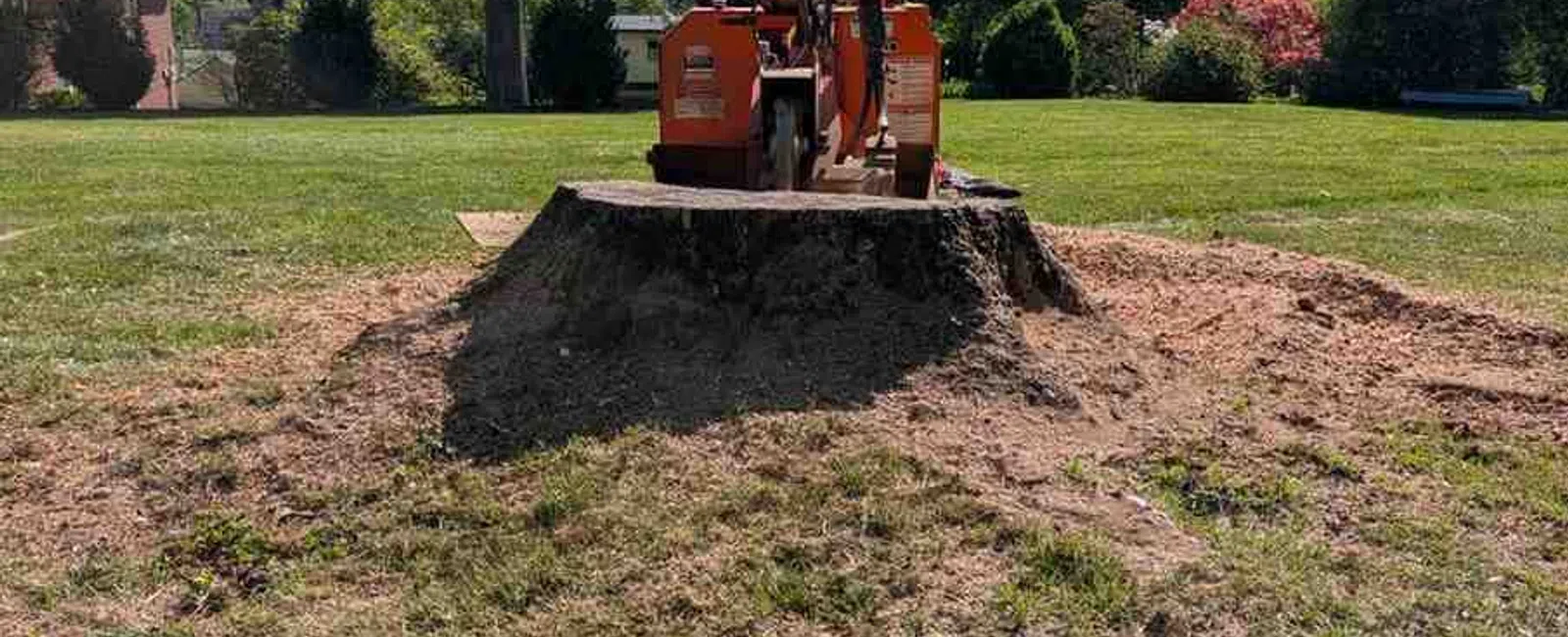
back where you started. The finish is to grind
them out and haul the grindings away so the ground is level and
mowable again. That is the step that makes reclamation stick.
What is Hiding in an
Overgrown Lot
Thick growth is
good at hiding things that will hurt you or your equipment. Before anyone walks
in swinging a blade, it helps to know what tends to be under there:
- Old stumps, root flares, and rock ledges that catch a mower deck or a boot.
- Poison ivy and poison oak often climb the saplings you are about to cut.
- Ticks and chiggers through the warm months, and copperheads holed up in brush and rock.
- Yellowjacket and groundhog nests in the ground, easy to hit and hard to see.
- Old wire fencing, T-posts, and buried junk that will wreck a blade or a grinder.
- Wells, septic lids, utility pedestals, and drop-offs that need marking before a machine runs.
What You Can Handle
Yourself, and What Needs a Crew
Plenty of overgrown properties are within a motivated owner's reach. Some of it is not. Here
is the honest split:
|
The task |
What it takes |
Do it yourself? |
The catch |
|
Tall grass and light weeds |
Mower, string trimmer |
Yes |
Standard lawn gear handles it in an afternoon. |
|
Dense brush and
brambles |
Brush cutter,
walk-behind or tractor-mounted mower |
Sometimes |
Rent the machine or
hire it out once stems pass finger thickness. |
|
Saplings and small trees |
Chainsaw and correct felling technique |
With caution |
Fine for a few small stems on flat ground, risky on slopes
or near buildings. |
|
Hauling the cut
material |
Truck, trailer, a
place to dump it |
Sometimes |
Volume adds up fast.
One cleared lot can fill several loads. |
|
Stumps left in the ground |
Stump grinder |
No |
Grinders are heavy and hidden rock or old metal ruins the
teeth. |
The Best Time of Year to Reclaim a Lot
Late fall through early spring is the window. Leaves are down, so you can read the ground and spot hazards, and snakes, ticks, and stinging insects are dormant or slow. The soil is usually firm enough to hold a machine without rutting. Try the same lot in July and you are working blind through full canopy, in the heat.
Get Your Ground Back
SWVA Stump Co. reclaims overgrown yards and lots across Southwest Virginia, Northeast Tennessee, and Western North Carolina, from the first pass of the brush cutter to the last ground-out stump. Tell us what you are looking at, and we will walk the property with you. Reach out for a look at your lot.