
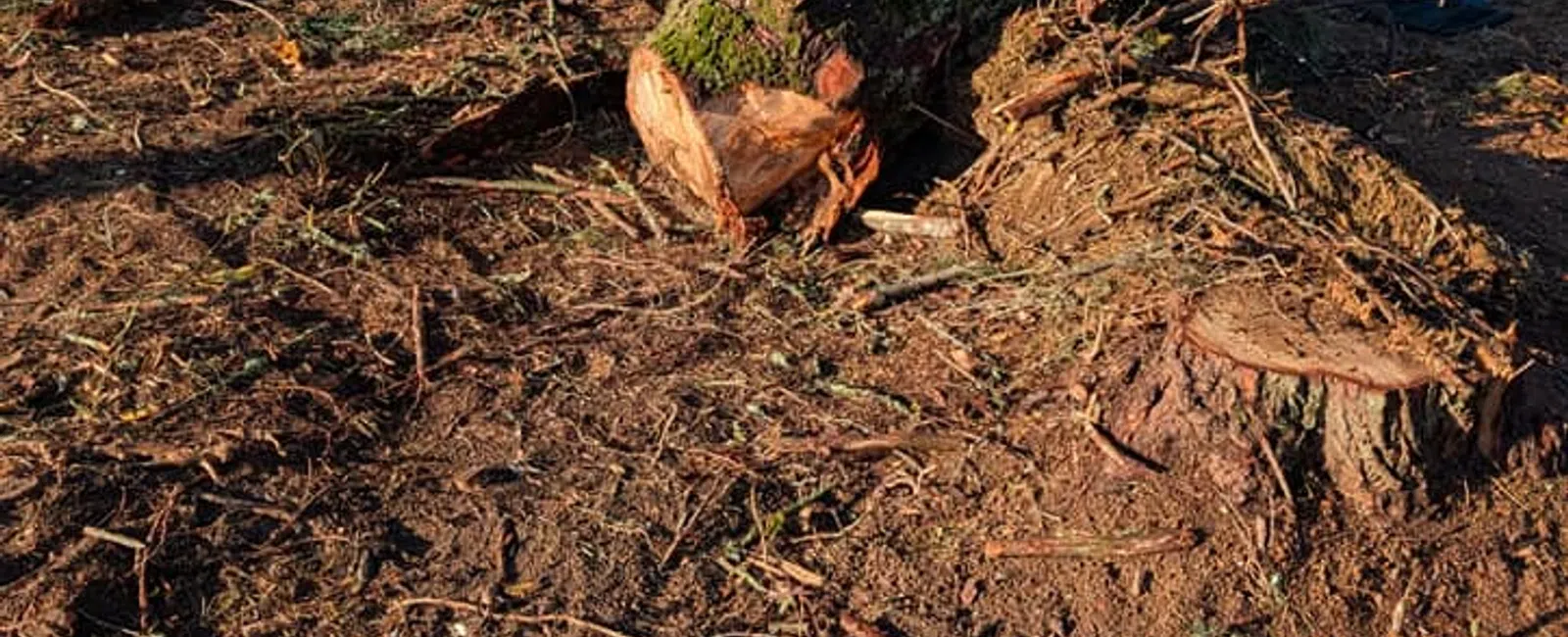
Washington County, Virginia, accepts brush at only one of its convenience centers, the Abingdon area site, and only in pieces up to 6 inches thick and 4 feet long. Limits like that explain why yard debris removal so often turns into a hauling job instead of a quick trip to the dump. Branches, cut limbs, brush piles, and storm debris already on the ground are one half of the problem. Old brick, block, and stone from a torn-down retaining wall are the other half, and they are harder to dispose of.
What Counts as Yard Debris
Yard debris falls into two groups. Natural debris is plant material: branches, limbs, brush, and whatever a storm drops across a property. Hardscape debris is everything that is not plant material, including brick, block, stone from old retaining walls, and leftover landscaping or construction materials. Local programs treat the two groups differently, with separate size limits and separate drop-off rules for each.
Mixed piles are the hardest to place. Washington County's solid waste rules require clean loads with no trash mixed in, so a pile of limbs lying on top of broken block has to be sorted before any drop-off.
Where Yard Debris Can Go Without a Hauler
Washington County's brush rule is the clearest local example. Brush and tree trimmings go only to the Abingdon Area convenience center, limited to 6 inches in diameter and 4 feet in length, and the load must be clean. The county's other convenience centers do not take brush. A homeowner with a fallen limb or a month of trimming has to cut everything to length, sort it, load it, and drive to that one site. Rules in neighboring counties and in Tennessee and North Carolina differ, so the local solid waste office is the place to confirm limits before loading a truck.
Open burning is the other common route, and it is regulated at the state level. Virginia, Tennessee, and North Carolina each set their own limits on burn times, seasons, pile size, and distance from buildings, and local rules can add more. Brush piles that are too large or too close to a structure for a legal burn end up back in the hauling category.
Why Brick, Block, and Stone Are the Hardest Yard Debris to Dispose Of
Washington County accepts masonry blocks and brick only when they are broken into 18-inch squares or smaller, with no trash or metal mixed in. Taking apart a retaining wall produces heavy pieces that have to be broken down, separated from soil, roots, and any metal, and loaded by hand before the first trip. Stone and leftover landscaping or construction materials raise the same problem. Weight and sorting, not volume, are what make hardscape debris a job for a truck and a crew.
What Professional Yard Debris Removal Covers
Debris clean up covers both groups: branches and limbs, plus brick, block, and stone from old retaining walls, leftover landscaping or construction materials, and mixed yard clutter. Brush piles, cut limbs, and storm debris already on the ground fall under brush clean up. The crew loads everything it hauls, takes it off the property, and rakes the area once the pile is gone. Storm jobs follow the same pattern, with downed limbs cut to a loadable size on site before hauling.
Debris Clean Up, Brush Clean Up, and Brush Cutting: Which One Fits
Material already on the ground is a clean up job. Debris clean up covers mixed and hardscape material, and brush clean up covers piles of cut limbs, branches, and storm debris. Brush still standing along a property line, fence row, or back lot is a brush cutting job, and where the cut material needs to leave the property, brush clean up covers the hauling. A stump left behind after a tree comes down is handled through stump grinding with haul away.
Many properties need two of these together, such as brush cutting along a fence row followed by a clean up of the cut material. Cutting comes first so the crew can see what is on the ground, and hauling follows once the pile is consolidated.
Getting a Property Ready for Debris Pickup
A few steps make a debris job go faster. A clear path lets a truck reach the pile, and a note about the nearest access point helps when the debris sits behind a house or down a slope. Anything in the area that should stay, such as irrigation heads, septic lids, and landscaping beds, is worth marking so raking and loading do not disturb it. Brush piles that have sat for years often hide old wire, fence posts, and nails, so pointing out hazards ahead of time helps. Material the property owner wants to keep, such as usable stone, can be set aside before the crew arrives.
What Affects the Cost of Yard Debris Removal
Pile size, the type of material, and how close a truck can get to the debris are the usual factors behind any hauling quote. Brick, block, and stone weigh far more than limbs of the same volume, so hardscape loads tend to run higher than brush loads of the same size.
Yard Debris Removal in Southwest Virginia, Northeast Tennessee, and Western North Carolina
SWVA Stump Co provides yard debris removal in Abingdon, Bristol, Marion, Norton, and Wytheville in Virginia; Bristol, Elizabethton, Erwin, Johnson City, Kingsport, and Mountain City in Tennessee; and Banner Elk, Beech Mountain, Blowing Rock, and Boone in North Carolina. Brush, limbs, storm debris, brick, block, and stone all fall within the same service. The company is licensed and insured, and estimates are free. Call 276-477-4240 or use the contact form to schedule one.