
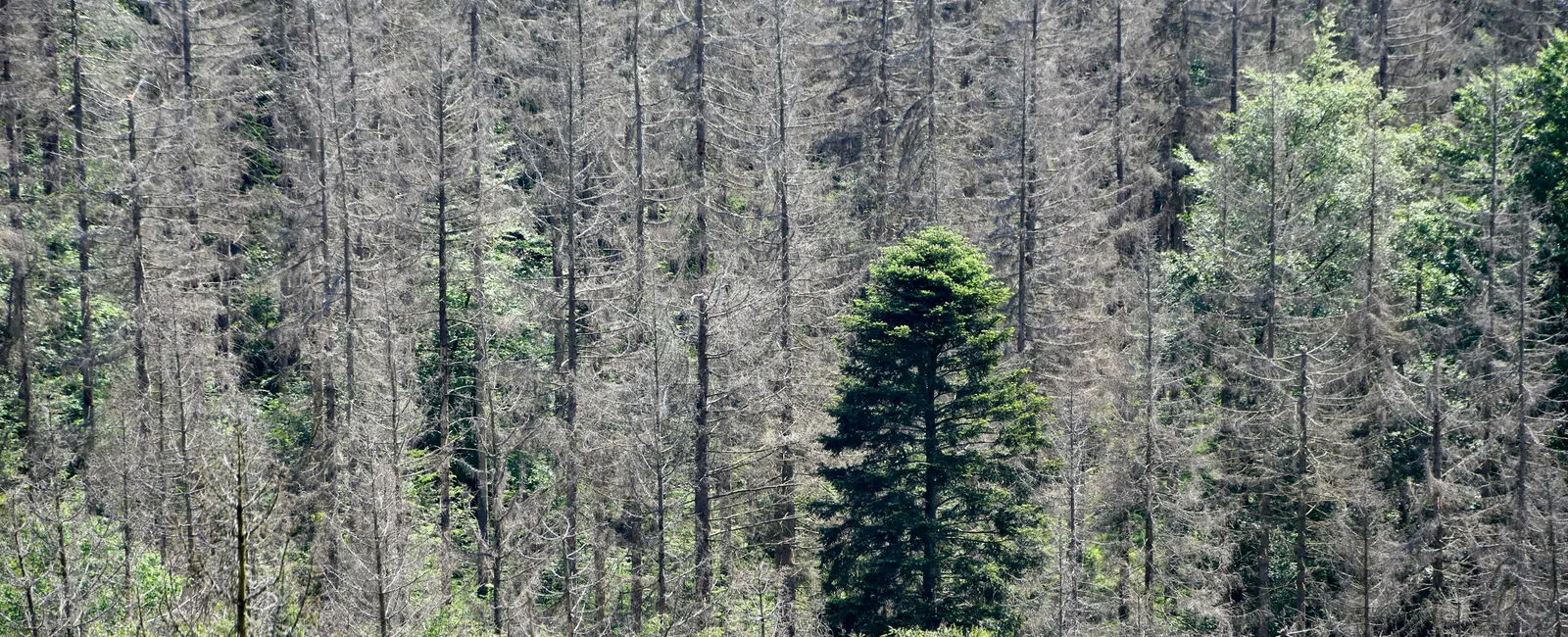
Every spring we get calls from folks in Abingdon and Johnson City asking the same question. The oak in the side yard leafed out late, or barely leafed out at all, and now they are wondering whether to call somebody with a chainsaw or give it another season.
It is a fair question, and the answer is not always obvious from the porch. Plenty of trees that look finished in March are just running behind. Others look fine from a distance and are hollow enough to come down in the next ice storm.
First, rule out dormancy
Trees in our part of the Appalachians go dormant from roughly late October through April, depending on elevation. A dormant tree drops its leaves, stops growing, and sits there looking exactly like a dead tree. Up around Beech Mountain and Boone, leaf-out can run two to three weeks behind what folks see down in Bristol.
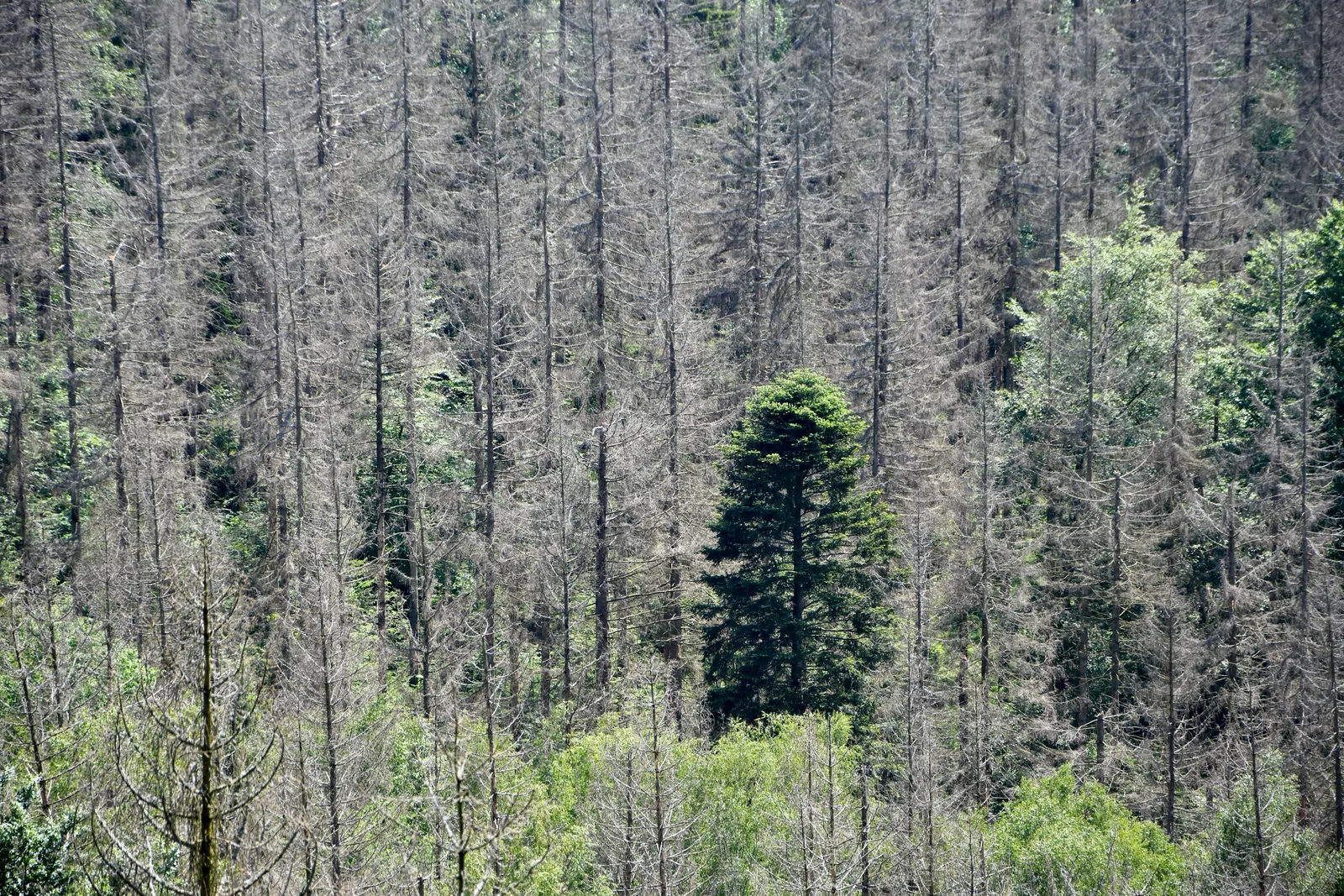
So if it is winter or early spring, hold off on any conclusions until you run the two tests below. Judging a tree by its leaves in February tells you almost nothing.
If it is July and your tree is bare while everything around it is full, that is different. A tree that misses an entire growing season is in serious trouble.
The scratch test
This is the fastest check there is, and it works any time of year.
Take a pocketknife or your thumbnail and scrape a small patch of the outer bark off a twig, roughly the diameter of a pencil. You are looking for the cambium layer, the thin band of living tissue just under the bark.
Green and moist means that part of the tree is alive. Brown, dry, or gray means that part is dead.
Do this in four or five spots around the tree, not just one. A single dead branch means nothing. What matters is the pattern. If every twig you scratch comes back brown, work your way inward toward the trunk and try again on larger limbs. If the cambium is brown at the trunk too, the tree is gone.
The snap test
Bend a small twig between your fingers.
A live twig bends. It has moisture in it, and it will flex a good way before it gives. A dead twig snaps clean and sounds dry when it breaks, more like a pencil than a green stick.
Run the snap test alongside the scratch test on the same branches. Two checks agreeing is worth more than either one alone.
Six signs of a dying tree you can spot from the ground
Some trees pass the scratch test in the upper canopy and are still headed for the ground. These are the warning signs we look for when we walk a property.
- Bark falling off in sheets. Trees shed bark naturally, especially sycamore and shagbark hickory. What is not normal is bare wood showing underneath with no new bark forming behind it. Bare, smooth patches on a species that should have thick bark usually mean the tissue under it died a while back.
- Mushrooms and shelf fungus on the trunk or root flare. Turkey tail, hen of the woods, and the hard shelf conks are all decay fungi. They feed on dead wood. When you see them growing out of the trunk or where the trunk meets the ground, the interior is already rotting even if the crown still has leaves. This is one of the more serious signs of a dying tree because the damage is structural and you cannot see how far it goes.
- Vertical cracks and hollow spots. Tap the trunk with the back of an axe or a hammer. Solid wood gives a dull thud. A hollow section sounds noticeably different. Combine a hollow trunk with a lean, and you have a tree that will decide its own falling direction.
- Dead branches in the upper canopy. Arborists call these widowmakers for a reason. A few dead limbs on an otherwise healthy tree are normal and can be pruned out. When a third or more of the canopy is bare while the rest leafs out, the root system is failing to supply the whole tree.
- Sprouts along the base of the trunk. Sudden shoots coming out of the root flare or low trunk look like new growth, and people take them as a good sign. Usually they are the opposite. A stressed tree pushes out these sprouts as a last effort when the main canopy is dying back.
- Soil heaving or lifting near the base. If the ground on one side of the tree looks raised or cracked, the root plate is moving. That tree is already in the process of coming down.
Trees that give us trouble in this region
A few species around here fail for predictable reasons, and knowing which tree you have narrows things down fast.
Ash trees have been hit hard by emerald ash borer across Southwest Virginia and Northeast Tennessee. The pattern is distinctive: dieback starting at the top of the canopy, sprouts along the trunk, and S-shaped tunnels under the bark. Woodpecker damage that strips bark off the upper trunk is often the first thing homeowners notice. Once an ash is symptomatic, it typically dies within two to four years, and dead ash gets brittle fast, which makes it dangerous to take down later rather than sooner.
Eastern hemlock has been under pressure from the hemlock woolly adelgid, especially at higher elevations near Banner Elk and Mountain City. Look for white cottony specks at the base of the needles.
Pines that go from green to rust-colored in a single season are usually dealing with bark beetles, and by the time the needles turn the tree is finished.
How long will a dead tree stand?
Longer than most people expect, which is exactly the problem.
A dead hardwood can stand for several years before it comes apart. During that time, the wood dries out and loses flexibility, so it does not sway with wind the way a living tree does. It snaps instead. Storms roll through these mountains hard enough as it is, and a dead tree is the one most likely to end up across a driveway, a fence, or a roofline.
If the tree is well away from anything you care about, leaving a snag standing is genuinely good for wildlife. Woodpeckers, owls, and bats all use them. If it is within falling distance of a house, a shed, a power line, or a spot where people park, that calculation changes.
What to do once you know
If the tree is alive but stressed, a certified arborist can tell you whether treatment is worth the money. That is their specialty and we will point you to one.
If the tree is dead, it needs to come down while it is still predictable. And once it is down, you are left with a stump, which is where we come in.
We handle small tree removal for homeowners across the region, and we grind the stump so you can reseed, replant, or build over the spot. You pick what happens to the grindings: we can grind and go, relocate the mulch to another part of your property, or haul it away entirely.
If a storm already brought the tree down, our debris clean up crew clears the limbs and the mess along with it. We wrote more about that in After the Storm.
Not sure what you are looking at? Send us a photo.
Run the scratch test, take a picture of the trunk and the canopy, and give us a call at 276.477.4240. We will tell you straight whether it looks like a removal job, a stump job, or something to leave alone another season. Estimates are free, and there is no obligation.
We serve Abingdon, Bristol, Marion, Norton, and Wytheville in Virginia. Bristol, Elizabethton, Erwin, Johnson City, Kingsport, and Mountain City in Tennessee. Banner Elk, Beech Mountain, Boone, and Blowing Rock in North Carolina.
Get a free estimate or call 276.477.4240.