
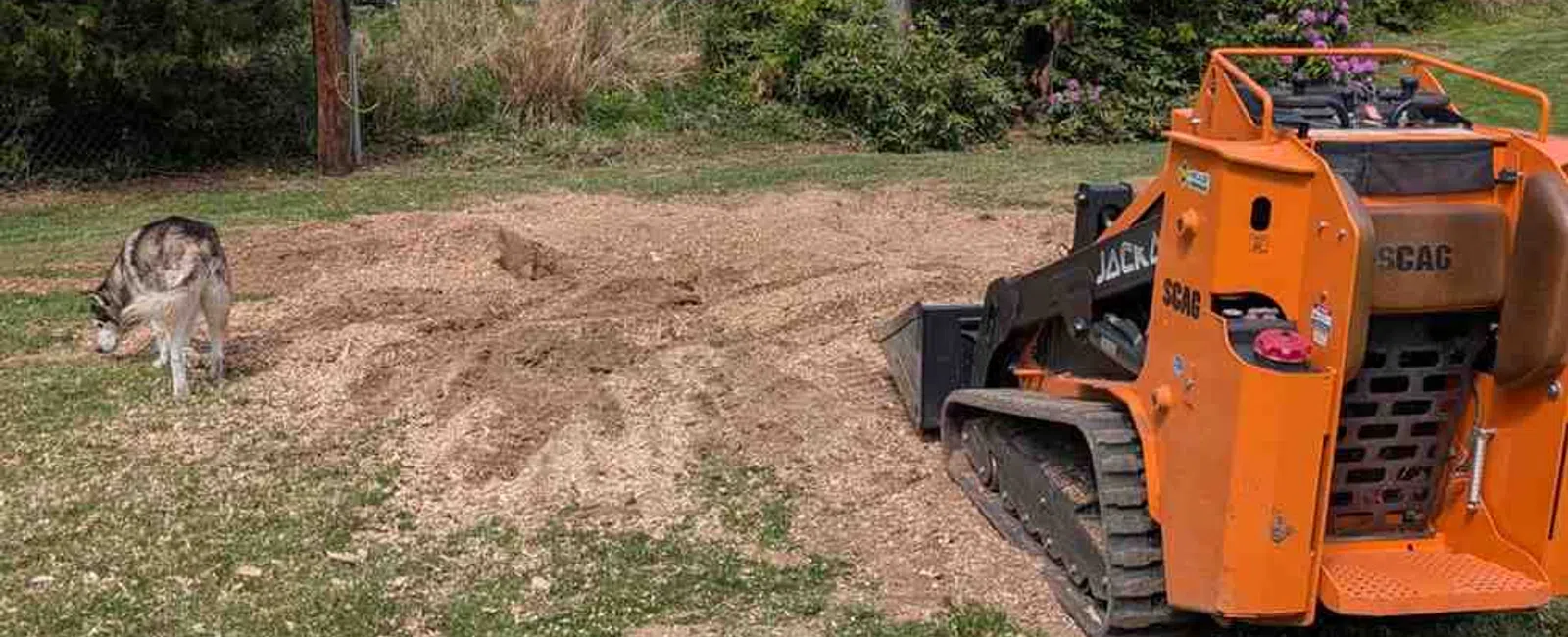
Grinding a stump produces more material than the hole it came out of. Wood expands when it is chipped, so a stump sitting flush with your lawn can leave a mound twice the volume of the wood that was there.
How you handle that mound decides whether the spot grows grass in six weeks or sits as a bare dish in your yard for two years.
The Grind Site Will Settle Over the First Year
A standard grind cuts 4 to 8 inches below grade. The cutting wheel does not lift the wood out. It shreds the stump into chips that drop straight back into the cavity.
Those chips then decompose for one to three years. Oak and hickory, both common across Southwest Virginia, hold their structure far longer than poplar or pine.
As the wood loses mass, the ground drops with it. A spot that looked level in April is often a two inch depression by the following spring. Anyone planning to reseed, lay sod, or mow that ground needs to get ahead of the settling.
Clearing the Wood Chips Off the Site
Rake the pile back with a hard tine rake and scoop the loose chips out of the cavity. The layer underneath, fine soil mixed with small wood fragments, can stay where it is.
The chips still have value somewhere else on the property. They hold up as ground cover around established shrubs, as a base layer under a footpath, or as brown material in a compost pile.
The one place they do not belong is under new grass seed. The practical uses for stump grinding mulch depend on how fresh the chips are and where they end up.
Wood Chips Pull Nitrogen Away From New Grass
Fresh wood chips carry a carbon to nitrogen ratio near 400 to 1. Soil microbes breaking that carbon down need nitrogen to do the work, and they take it from the soil right around them. Grass seeded into a chip bed competes for the same nitrogen and loses.
The failure shows up two to three weeks after seeding. Blades come up pale yellow, grow thin, and stall at an inch or two before dying back. Most people read it as bad seed or not enough water.
Removing the chips fixes it. Nitrogen fertilizer helps when some chip material stays behind, though no amount of it turns a deep chip bed into a seedbed.
Backfilling the Hole With Topsoil
Fill the cavity with screened topsoil rather than the material you just pulled out. Grass roots need 4 to 6 inches of real soil to establish, and a thin skim of dirt over chips will not carry a lawn through an Appalachian summer.
A 24 inch stump ground 6 inches below grade opens a cavity of roughly 3 to 5 cubic feet once the root flare is counted, which works out to four to seven bags of topsoil. Past the third stump, buying by the scoop from a local supplier costs less than bagged soil.
Mound the fill 1 to 2 inches above the surrounding grade. The site will settle further as remaining fragments break down, and that extra height keeps the finished spot level instead of dished.
Much of Southwest Virginia sits on heavy clay that drains slowly and compacts hard. Mixing compost into the top few inches of fill gives new roots something to move through.
When to Seed a Grind Site in Southwest Virginia
Lawns across the Tri-State region run on cool season grasses, with tall fescue doing most of the work. It germinates in 7 to 14 days when soil temperatures hold between 60 and 70 degrees.
| Seeding window | Timing | Trade-off |
|---|---|---|
| Fall, the stronger option | Late August to mid October | Warm soil, dropping weed pressure, and fall rain doing the watering |
| Spring | March to mid April | Seedlings hit July heat with shallow roots and need far more water |
Seed too late in fall and the new grass goes into winter without enough root to survive frost heave.
Elevation shifts both windows. Higher ground around Boone, Beech Mountain, and Mountain City cools earlier and warms later than Bristol or Kingsport, closing the fall cutoff a couple of weeks sooner. That same elevation pattern shapes the best time of year for stump grinding across the region.
How Soon You Can Plant After Stump Grinding
Grass can go down the same day the site is backfilled with clean topsoil. There was never a waiting period. The problem was the chips.
Planting a new tree is a different answer. The old root system stays in the ground and decays for years, creating air pockets, holding water unevenly, and hosting root rot organisms like Armillaria that will move into a young tree.
Two approaches work:
- Offset the new tree 3 to 5 feet from the old trunk position, which puts its roots into undisturbed soil and costs nothing but a few feet of yard.
- Excavate a hole roughly 3 feet across and 2 feet deep, haul out the old root material, and refill with clean soil.
We can grind deeper than standard when someone plans to replant, which cuts the excavation work considerably. Mention it when you request the estimate so we bring the right setup.
The Roots Below the Grind Line
Grinding removes the stump and the upper root flare. It leaves the lateral root system, which can run 20 feet or more from the trunk on a mature tree. Those roots decay in place over three to seven years.
Grass grows over them without trouble. Patios, footings, and driveways are another matter, since voids form as the wood breaks down. What happens to tree roots after grinding matters most when construction is the next step.
Sprouting is the other common question. A stump ground below the root collar loses the growth tissue it needs to push new shoots. Black locust and tree of heaven can still send suckers up from lateral roots for a season or two, which is a separate mechanism from stumps growing back at the original trunk.
Choosing a Cleanup Level Before We Grind
Most of the work above disappears depending on which finish you pick at the time of the estimate.
- Standard stump grinding leaves the mulch piled on the site or raked out around it. This is the right call when the chips are useful to you and the spot is out of the way.
- On-site mulch relocation rakes the site level and moves the excess wherever you want it, such as a garden bed or a low corner of the property that needs filling.
- Full debris haul off takes every bit of mulch off the property and leaves the site raked to grade. Pick this one when sod, a patio, or new landscaping is going in behind us.
Get a Free Estimate
We grind stumps across Southwest Virginia, Northeast Tennessee, and Western North Carolina, and we will tell you before we start which cleanup level fits what you have planned for the space. Call 276.477.4240 for a free, no obligation quote.